
The Singapore Grand Prix occupies a unique position in the Formula 1 calendar as the original night race, a designation it has held since debuting in 2008. The combination of the floodlit Marina Bay Street Circuit, the dramatic central business district skyline backdrop, and the integrated concert programme produces a race weekend that runs unlike any other on the global F1 schedule. For visitors based in Malaysia considering the short flight or coach trip across the causeway, understanding what specifically makes the Marina Bay race different from other Grand Prix weekends helps in deciding whether the trip justifies the budget. F1 Singapore admission tickets sell quickly each year precisely because the night-race format has built such a strong following among fans who treat the weekend as more than a standard motorsport visit.
The Night-Race Innovation
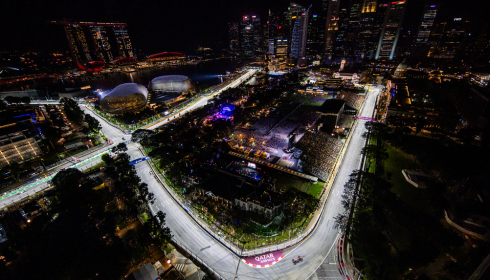
The original case for running the Singapore race at night came down to broadcast scheduling — an evening start in Singapore aligns with prime-time European audiences, which dominate F1’s viewership. The practical execution required installing one of the largest sports lighting systems in the world: roughly 1,600 lighting projectors mounted on aluminium trusses running the full circuit perimeter, delivering illumination roughly four times brighter than typical street lighting. The visual result is dramatic — the floodlit cars against the dark Marina Bay background produce some of the most photographed motorsport visuals worldwide.
The Marina Bay Street Circuit Layout
The circuit runs 4.94 kilometres through the central business district with 19 turns including several signature corners. The Anderson Bridge crossing at Turn 13 represents one of the few Grand Prix corners on a working public road bridge. The marina-facing section past Turns 17 through 22 delivers the iconic skyline backdrop with Marina Bay Sands, the Singapore Flyer, and the central business district towers all framing the circuit. The race typically runs 61 laps for a total distance of 308 kilometres, with the average race time around 1 hour 45 minutes — significantly longer than most F1 weekends due to the safety car periods that the street-circuit format encourages.
Heat, Humidity, and Driver Fitness
Singapore in September runs hot and humid even at night, with track temperatures sometimes exceeding 50 degrees during the race itself. The combination of physical cockpit demands, the high-cornering nature of the circuit, and the climate makes the Singapore Grand Prix one of the most physically demanding races on the F1 calendar. Drivers typically lose three to four kilograms of body weight across the race. For spectators in the open-air grandstands, the heat and humidity remain a real consideration — F1 Singapore admission includes access to several shaded zones and air-conditioned hospitality areas at premium price tiers, but the standard grandstand experience runs hot.
The Concert Programme as Race Weekend Anchor
What separates the Singapore Grand Prix from most other F1 weekends is the concert programme. Friday and Saturday evening concerts feature major international rock, pop, and electronic music acts on stages built into the circuit perimeter. The 2026 programme follows the same pattern, with full three-day grandstand and walk-about tickets including concert access at no additional cost. The combination of the racing and concert programme turns the weekend into a hybrid sporting-and-music festival that draws audiences well beyond the F1 hardcore.
Race Day Pacing and Timing
The race weekend follows a tight timing pattern. Friday Practice 1 typically runs around 5pm with Practice 2 at 8pm, both under the floodlights. Saturday qualifying runs at 8pm. The Sunday race itself starts at 8pm with lights-out around 8:05pm, with the trophy presentation concluding by 10:30pm. The post-race fireworks display adds the closing visual flourish before the crowd disperses through the multiple zone exits. The MRT system runs extended hours through race weekend with extra trains added to handle the post-race exit volume.
What the Three-Day Ticket Actually Includes
A standard three-day grandstand or walk-about ticket includes: access to all on-track sessions Friday through Sunday, entry to the trackside concert programme, access to multiple food and beverage zones throughout the circuit, and entry to the post-race fireworks viewing area. Premium upgrades like the Paddock Club add hospitality dining, climate-controlled lounges, and pit lane walk access at substantially higher pricing. The F1 Singapore admission ticket category should match what kind of weekend the visitor actually wants from the trip.
The Booking Trip for Malaysian Visitors
For visitors based in Malaysia, the standard trip combines a one-hour flight (RM200 to RM450 one-way) with two nights of accommodation and the F1 weekend tickets. Booking through a regional Southeast Asian platform like Traveloka — which lists everything in MYR with FPX, Boost, GrabPay, and Touch n Go accepted at checkout — handles the cross-border booking flow cleaner than Agoda’s hotel-focused inventory or Trip.com’s Greater China-weighted catalogue. The single-checkout flow also avoids the small foreign-exchange surprises that sometimes show up at the credit-card layer with other booking platforms.
Watching Practice and Qualifying
Many first-time visitors underestimate Friday practice and Saturday qualifying as standalone events. Friday practice sessions run two hour-long blocks with multiple drivers completing programme work, often producing surprising mid-session moments that get less broadcast attention than the race itself. Saturday qualifying compresses everything into 90 minutes of high-stakes single laps — the pole-position decision and the dramatic eliminations through Q1 and Q2 deliver some of the most concentrated drama of the weekend. Visitors with full three-day tickets get the strongest value from attending all three days rather than treating the Sunday race as the only event worth showing up for.
Final Thoughts
The Singapore Grand Prix continues to deliver one of the most distinctive sporting weekends in the global calendar. The night-race format, the Marina Bay skyline backdrop, the integrated concert programme, and the city’s strong food and transport infrastructure all contribute to a weekend that justifies the cost for sports fans willing to plan three to four months ahead. For visitors based in Malaysia, the combination of the short flight and the night-race spectacle makes this one of the most accessible major international sporting events on the calendar.