
Water is one of those things businesses tend to take for granted—until it starts causing problems. Hard water leaves scale on equipment, poor-quality water affects production, and unpleasant taste or odors can create complaints from employees and customers. For hotels, restaurants, healthcare facilities, offices, manufacturing units, and other commercial properties, water quality isn’t simply a comfort issue. It can influence maintenance costs, efficiency, hygiene, and even the quality of the final product.
That’s why commercial water treatment deserves more attention than it often gets. The right system can protect equipment, improve water quality, and reduce the headaches that come with constantly dealing with mineral deposits or contaminants.
Why Water Quality Matters in Commercial Operations
Commercial facilities can use thousands of litres of water every day. Think about a hotel with guest rooms, laundry services, kitchens, cooling systems, and housekeeping. Or a restaurant where water is used for cooking, cleaning, dishwashing, and beverages. Even a relatively small water-quality issue can become expensive when multiplied across daily operations.
Hard water is a particularly common concern. It contains elevated levels of minerals such as calcium and magnesium. Over time, these minerals can build up inside pipes, boilers, heaters, dishwashers, and other equipment. That chalky white residue around taps isn’t just ugly—it can signal a larger problem inside the plumbing.
In facilities where hot water is used heavily, scale can be even more troublesome. It may reduce heating efficiency and force equipment to work harder. Eventually, maintenance becomes more frequent and replacement costs can creep upward.
Understanding Commercial Water Softeners
For businesses dealing mainly with hard water, commercial water softeners can be an effective starting point. These systems are designed to reduce hardness minerals before the water enters equipment or distribution lines.
A typical softening system uses an ion-exchange process. Calcium and magnesium ions are exchanged for sodium or another suitable ion, helping prevent the minerals from forming scale.
The important thing is choosing a system based on actual water demand. A small system installed in a busy hotel or manufacturing facility may struggle to keep up, while an unnecessarily large unit can increase purchase and operating costs.
Businesses should consider factors such as daily water consumption, peak demand, water hardness, regeneration requirements, available space, and local water conditions. It’s not particularly glamorous work, but getting these details right makes a big difference later.
When Reverse Osmosis Makes More Sense
Softening and purification aren’t the same thing. A water softener primarily addresses hardness, while reverse osmosis can target a much wider range of dissolved substances.
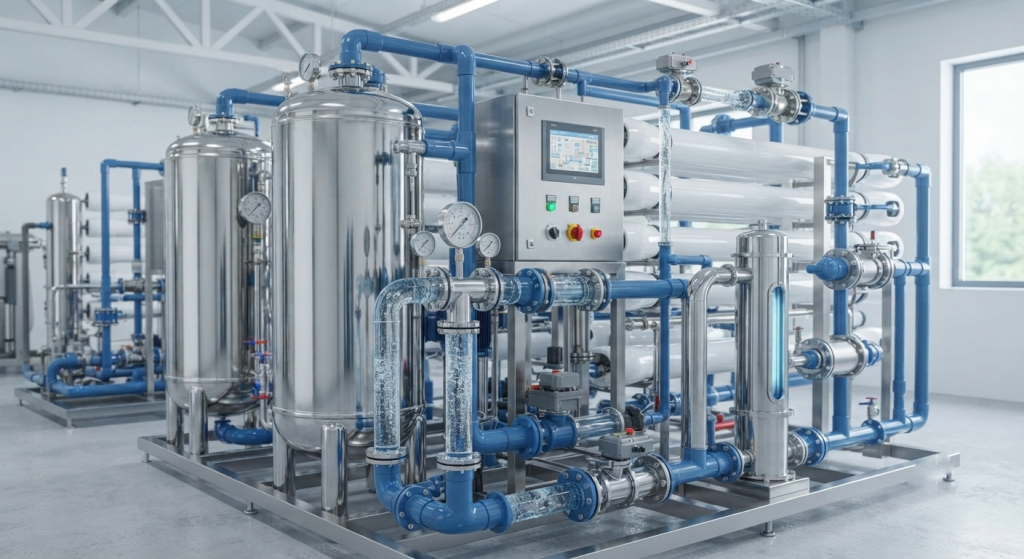
Commercial reverse osmosis systems use a semi-permeable membrane to remove many dissolved salts, minerals, and other impurities from water. They’re commonly used where higher-purity water is required, including food and beverage operations, laboratories, healthcare environments, hospitality applications, and certain manufacturing processes.
Reverse osmosis can be especially useful when the source water contains high levels of total dissolved solids (TDS), unwanted minerals, or other contaminants that need to be reduced.
However, RO isn’t automatically the answer to every water problem. These systems require proper pretreatment, membrane maintenance, and monitoring. Depending on the application, there can also be a concentrate or reject-water stream that needs to be handled responsibly.
So, rather than asking, “Which RO system should we buy?” a better question is, “What does our water actually contain, and what quality does our operation require?”
That small shift in thinking can prevent an expensive mistake.
Where Commercial Water Filtration Fits In
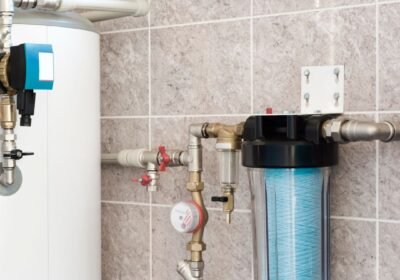
Filtration is another important part of commercial water treatment. Depending on the filter technology, filtration can help remove sediment, chlorine, certain organic compounds, unpleasant tastes, odors, and other unwanted materials.
Commercial water filtration is often used as part of a larger treatment setup rather than as a single solution for every contaminant. For example, sediment filtration may protect downstream equipment, while activated carbon can improve taste and reduce chlorine.
In many facilities, filtration works alongside softening or reverse osmosis. Pretreatment can help protect sensitive equipment and improve the performance of later treatment stages. In other words, water treatment isn’t always about finding one magical machine. Sometimes the smartest solution is a carefully designed combination.
How to Choose the Right System
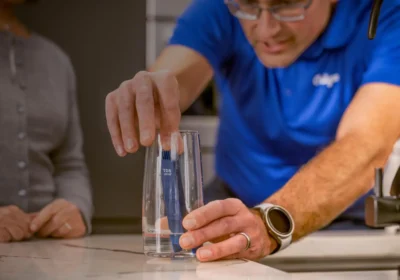
Before investing in commercial water treatment equipment, start with testing. A professional water analysis can identify hardness, TDS, pH, iron, manganese, chlorine, microbial concerns, and other characteristics relevant to the application.
Then look at actual consumption. Average daily usage matters, but peak demand matters too. A restaurant may experience sharp increases during meal periods, while a hotel can have substantial morning demand. Industrial facilities may have continuous or process-specific requirements.
Maintenance should also be part of the buying decision. Ask how frequently filters need replacement, how often membranes require cleaning, what chemicals are used during regeneration or cleaning, and whether trained technicians are available locally.
The cheapest system isn’t necessarily the most economical one. A lower upfront price can look attractive until frequent servicing, inefficient operation, downtime, and premature component replacement start adding up.
Efficiency, Sustainability, and Operating Costs
Modern businesses are increasingly looking beyond purchase price. Water consumption, energy use, chemical requirements, and wastewater generation all matter.
An efficient treatment system can help reduce scale-related energy losses and extend the useful life of equipment. At the same time, businesses should monitor water losses from regeneration and RO reject streams.
Automation can also make a difference. Modern controllers can monitor flow, pressure, conductivity, or regeneration cycles and provide alerts when maintenance is needed. This reduces the chances of discovering a problem only after water quality has already deteriorated.
Of course, technology isn’t a substitute for maintenance. Even the best-designed system needs regular inspection, cleaning, testing, and timely replacement of consumable components.
A Practical Approach for Businesses
There’s no universal water-treatment package that works for every commercial property. A small café, a large resort, a hospital, and a manufacturing plant can have completely different requirements.
Start with the source water. Understand the problem. Define the required water quality. Calculate demand. Then design the treatment process around those facts.
It also helps to think about future growth. If a business expects to add rooms, production lines, kitchens, or additional equipment, the treatment system should have enough flexibility to accommodate increased demand without becoming inefficient.
Most importantly, work with qualified water-treatment professionals who can explain why a particular configuration is being recommended. You should understand what each treatment stage does, what it removes, what it doesn’t remove, and what it will cost to operate over several years.
Final Thoughts
Water treatment may not be the most visible part of running a commercial property, but it quietly affects many other parts of the operation. From protecting boilers and plumbing to improving drinking water and supporting production processes, the right system can pay for itself through better efficiency and fewer maintenance problems.
Whether the need is hardness control, purification, or general contaminant reduction, the smartest approach is always based on actual water conditions and business requirements—not simply on the most expensive equipment available.
Good water treatment is less about buying a machine and more about building a reliable system. When that system is properly selected, installed, and maintained, it becomes one of those business investments you don’t think about very often—which, honestly, is probably a sign that it’s doing its job.