
Water seems like one of the simplest things in everyday life. Turn on a tap, fill a glass, and that’s that. But chemically speaking, water is rarely just H₂O. Natural and treated water usually contains a range of dissolved substances, including minerals and salts that are invisible to the eye.
That isn’t necessarily a bad thing. In fact, minerals are a normal part of many water supplies. The interesting question is what happens when those minerals need to be removed. This is where deionization becomes useful, particularly in laboratories, manufacturing, electronics, and certain specialized applications.
What Is Deionized Water?
At its simplest, deionized water is water that has had many electrically charged dissolved ions removed through an ion-exchange process.
Ordinary water can contain positively charged ions such as calcium, magnesium, sodium, and potassium. It can also contain negatively charged ions, including chloride, sulfate, bicarbonate, and nitrate.
A deionization system uses special resin materials to exchange these ions for hydrogen and hydroxide ions. Those ions can then combine to form water, leaving behind water with a much lower ionic content.
The process sounds complicated at first, but the basic idea is surprisingly neat: charged impurities are captured by the resin instead of remaining in the water.
Why Remove Minerals From Water?
For drinking, small amounts of minerals generally aren’t a problem. But in technical environments, even tiny quantities can cause trouble.
Water containing dissolved minerals may leave deposits on equipment, interfere with sensitive chemical processes, or affect the performance of certain instruments. Anyone who has seen chalky buildup around a faucet has already witnessed what minerals can do on a much larger, everyday scale.
In industrial or laboratory settings, that buildup isn’t merely annoying. It can affect accuracy, maintenance schedules, and production quality.
This is why water that’s perfectly acceptable for drinking may still be unsuitable for a particular machine or experiment.
How Does Deionization Actually Work?
Deionization relies on ion-exchange resin. There are generally two major types involved: cation-exchange resin and anion-exchange resin.
Cation resin attracts positively charged ions and replaces them with hydrogen ions. Anion resin does something similar with negatively charged ions, exchanging them for hydroxide ions.
When hydrogen and hydroxide combine, they form water.
Some systems use separate resin beds, while others use mixed-bed resin containing both types. Mixed-bed systems can produce very low ionic concentrations when properly maintained.
The effectiveness of the process depends on the incoming water quality, resin capacity, flow rate, and system design. It’s not simply a case of running water through a magic cartridge and forgetting about it.
Measuring Water Quality With Conductivity
One of the common ways to assess ion levels in treated water is conductivity. Since dissolved ions allow water to carry an electrical current, water with fewer ions generally has lower electrical conductivity.
This makes conductivity meters useful for monitoring deionization systems. When the reading starts increasing, it can indicate that the resin is becoming exhausted and is no longer removing ions as effectively.
For very high-purity applications, resistivity is also commonly discussed. Conductivity and resistivity are closely related measurements, just expressed in different ways.
For homeowners, these measurements might seem overly technical. In a laboratory or manufacturing environment, though, they can provide a quick indication of whether the treatment system is performing as expected.
Deionized Water Isn’t the Same as Distilled Water
People sometimes use “deionized” and “distilled” as if they mean exactly the same thing. They don’t.
Distillation relies on boiling water and then condensing the vapor, leaving many nonvolatile substances behind. Deionization uses ion-exchange resin to remove charged dissolved substances.
Both processes can produce highly treated water, but they don’t remove contaminants in exactly the same way.
In some applications, the two approaches may even be combined with other technologies to achieve the required quality.
Does Deionization Remove Everything?
No, and this is an important point.
Deionization is particularly effective at removing ions, but it isn’t a universal purification process. Depending on the system, substances such as microorganisms, particles, dissolved gases, and some uncharged organic compounds may not be adequately removed.
That’s why advanced water-treatment systems often combine several technologies. Reverse osmosis, activated carbon, ultraviolet treatment, microfiltration, and deionization can each serve different purposes.
Think of it as building a team. Each technology has a particular job, and expecting one process to do everything isn’t always realistic.
Where Is Deionized Water Used?
The applications are surprisingly broad.
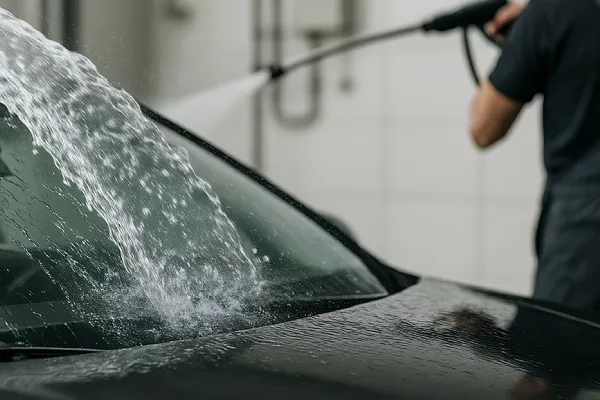
Laboratories use highly treated water for analytical work, reagent preparation, and sensitive instruments. Electronics manufacturers may require low-ion water during certain production and cleaning processes. Automotive and industrial facilities can use it where mineral deposits would create problems.
It also appears in certain cleaning processes, where reducing minerals can help prevent spotting or residue on surfaces.
The required purity level varies greatly. A process that needs moderately low-ion water isn’t necessarily going to require the same specifications as a high-precision laboratory.
What About Using It at Home?
For most household purposes, deionized water isn’t necessary. Drinking water doesn’t normally need to have every mineral removed, and standard household filtration can often address taste, sediment, hardness, or specific contaminants more appropriately.
There are some niche situations where highly treated water may be useful, particularly for equipment or specialized cleaning tasks. But installing an elaborate deionization system without knowing why you need it can become an expensive exercise.
Testing the source water first is a much more sensible starting point.
Maintenance Matters
Deionization resin has a finite capacity. Once the resin becomes exhausted, it can’t continue removing ions effectively until it is regenerated or replaced, depending on the system.
Regular monitoring helps prevent surprises. In professional applications, conductivity or resistivity measurements are often checked routinely. For smaller systems, manufacturers typically provide replacement or regeneration guidelines.
Skipping maintenance can turn a sophisticated treatment system into little more than an expensive box attached to a pipe.
Making the Right Choice
Deionization is a clever and highly useful water-treatment technology, but it isn’t automatically better simply because it produces very low-ion water.
The right approach is to start with the water you have and the job you need it to do. If mineral deposits are the issue, hardness treatment may be more appropriate. If dissolved contaminants are the concern, reverse osmosis could make more sense. If extremely low ionic content is required, deionization may be the missing piece.
Ultimately, good water treatment isn’t about chasing the purest possible water. It’s about matching the treatment to the purpose. Once you understand that distinction, choosing the right technology becomes much less confusing — and a lot more practical.